
Connecting the dots. Planting the seeds. Doing the work.
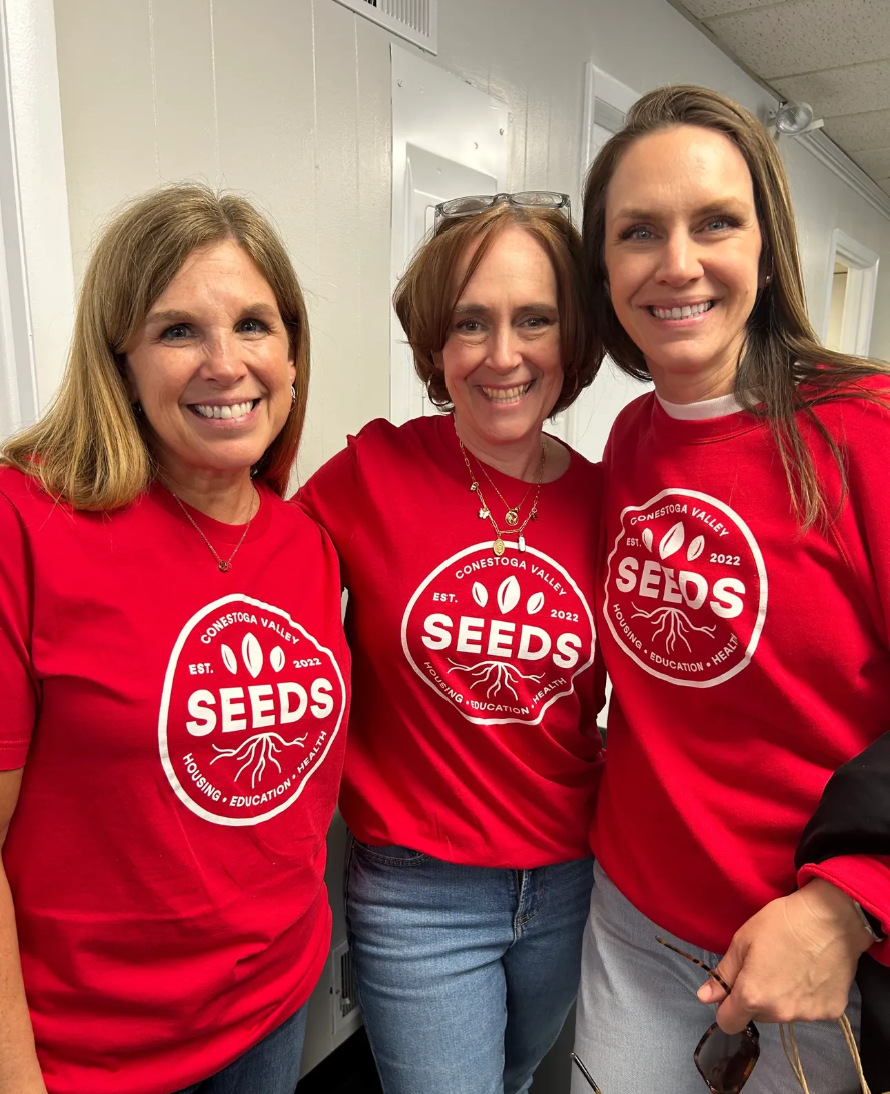
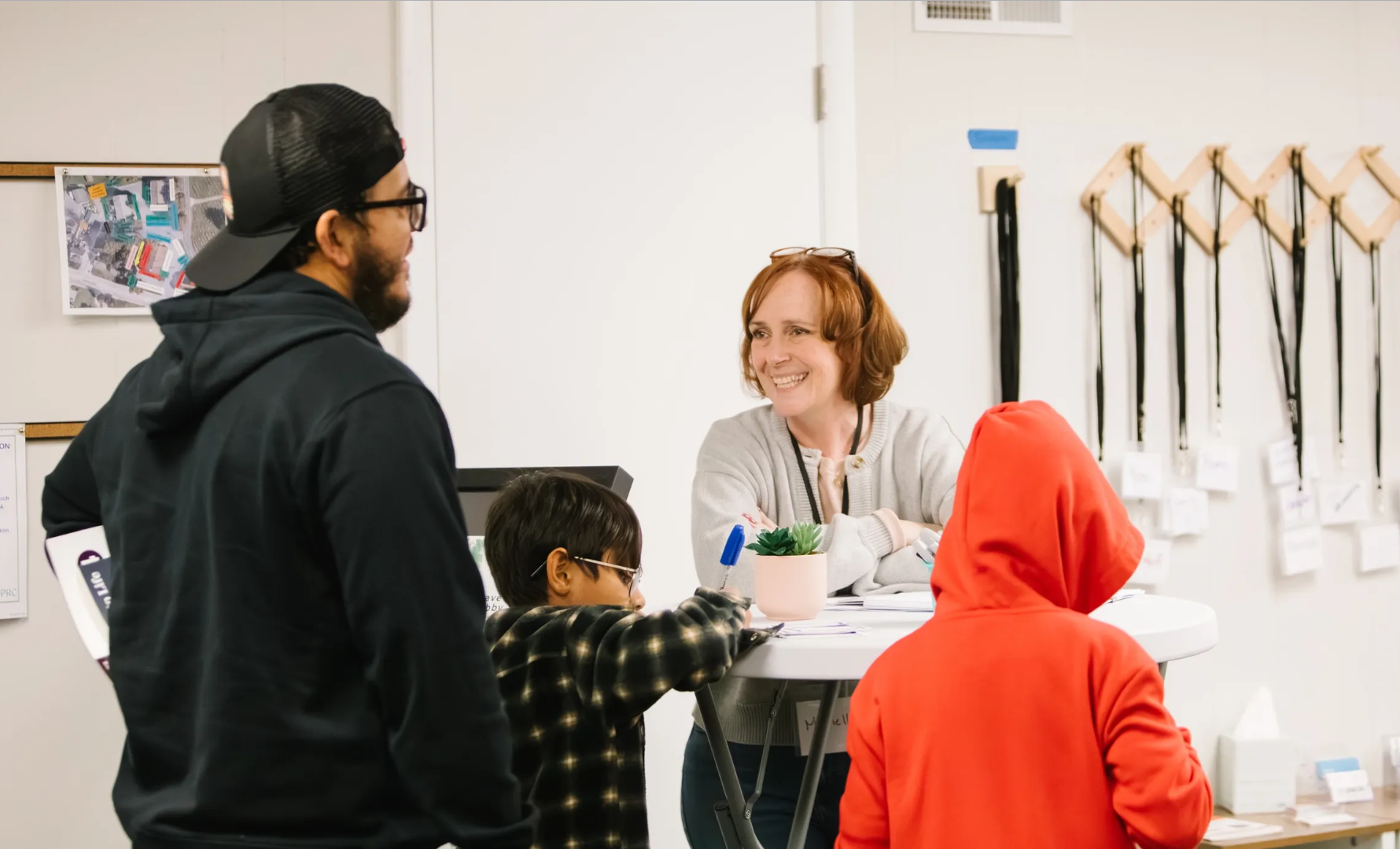
As the door swings open, Michelle Kime greets each person with a hug and then offers snacks or a bottle of water. Generosity seems second nature to her, almost like a reflex.
That hospitality is not one-sided. Michelle creates an environment where everyone who walks in the door — volunteers, neighbors, staff, donors — becomes part of the same circle of care.
“My house was always stocked with my children and my children’s friends' favorite snacks,” Michelle says. “They were always invited to take or grab whatever from the pantry or the fridge, so it feels natural and normal to do the same in the SEEDS space. We want it to feel like home.”
SEEDS, which stands for Selfless love, Empowerment, Equity, Deliberate partnership, and Stewardship, is a nonprofit that connects people with resources such as food and housing. Michelle, co-director of SEEDS, helps lead these efforts.
The roots of this work stem from her childhood, which included living overseas while her father taught.
Michelle cites many reasons for getting into this work, but that experience nurtured a deep sense of empathy and connection with others.
“That was kind of like a seed of something in my spirit,” she said. “That was intriguing to me and part of what made me who I was.”
Michelle says the catalyst that moved her from curiosity to ‘being deeply impacted and humbled in action’ was a decision that unknowingly launched 15 years of work in Cambodia.
When she became a mother, restlessness eventually settled in, and a desire to carve out something of her own. That urge led to an unexpected opportunity where an acquaintance invited her on an international trip.
There, Michelle began to see the real impact of systems and how they can work for some people while failing others entirely.
“I was specifically with women who are survivors of human trafficking and the barrier there was that they escaped, were rescued or were somehow out of that,” she says. “Almost the only option available to them was back to the brothel or working in the garment factories, where it was very often income as low as a dollar a day. There wasn't a margin for another opportunity.
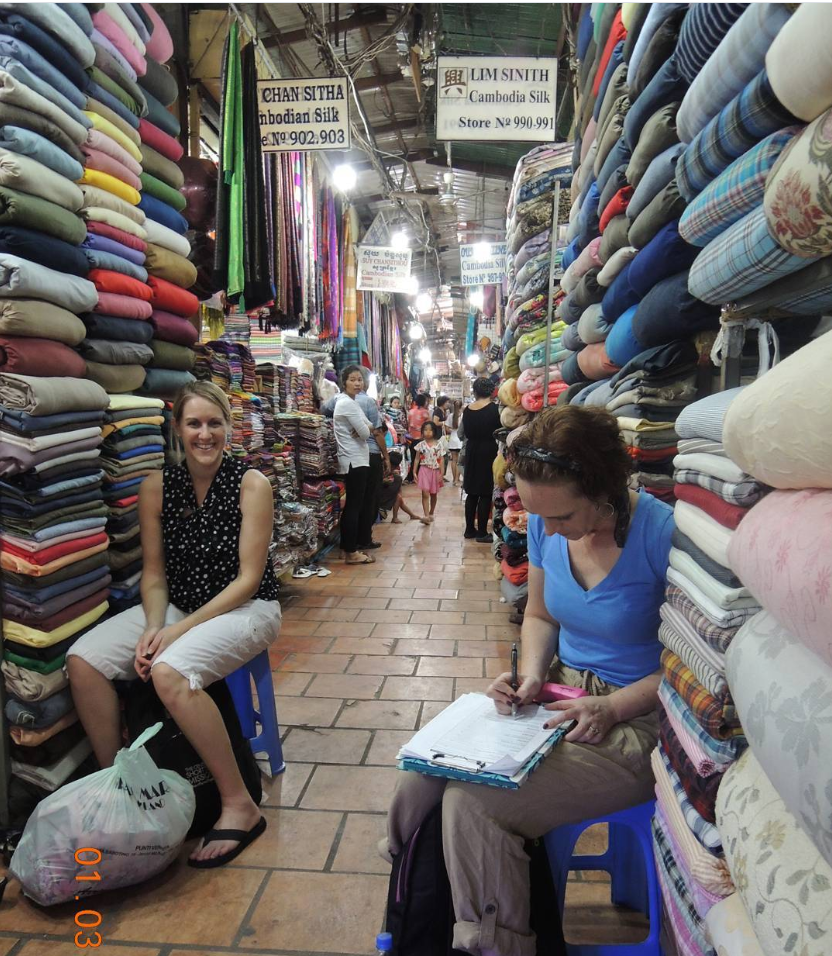
Traveling in Cambodia with Imagine Goods to source fabrics: source Imagine Goods, Instagram
Michelle, with Imagine Goods, helped create job opportunities by collaborating with organizations that offered job training in skills such as sewing and jewelry making.
“They also had on-site childcare and a family-style lunch where everyone came together to eat, [and] on-site counselors in case that was ever a need,” she said. “The role that we played was being one of the organizations they partnered with.” That partnership was a social enterprise that worked with the women to make clothing and sell it to wider markets, creating opportunities for fair wages as well as childcare and a supportive work environment.
Michelle quickly learned how sustainable employment provided opportunities for growth, freedom, empowerment, and generational change. She also realized that she had become “a resource to their dreams, just because I happened to live in America.”
Michelle often reflects on the moments that made her feel most alive, particularly when a barrier appeared. Even if she could not remove it herself, she’d work to find someone who could.
“My heart is to see barriers and to find where I can play a role in removing them so that someone can be all they’re created to be, can realize their dreams and do their thing.”
Back at SEEDS, the biggest barrier is language, which can make finding work, accessing services, or enrolling children in school overwhelming.
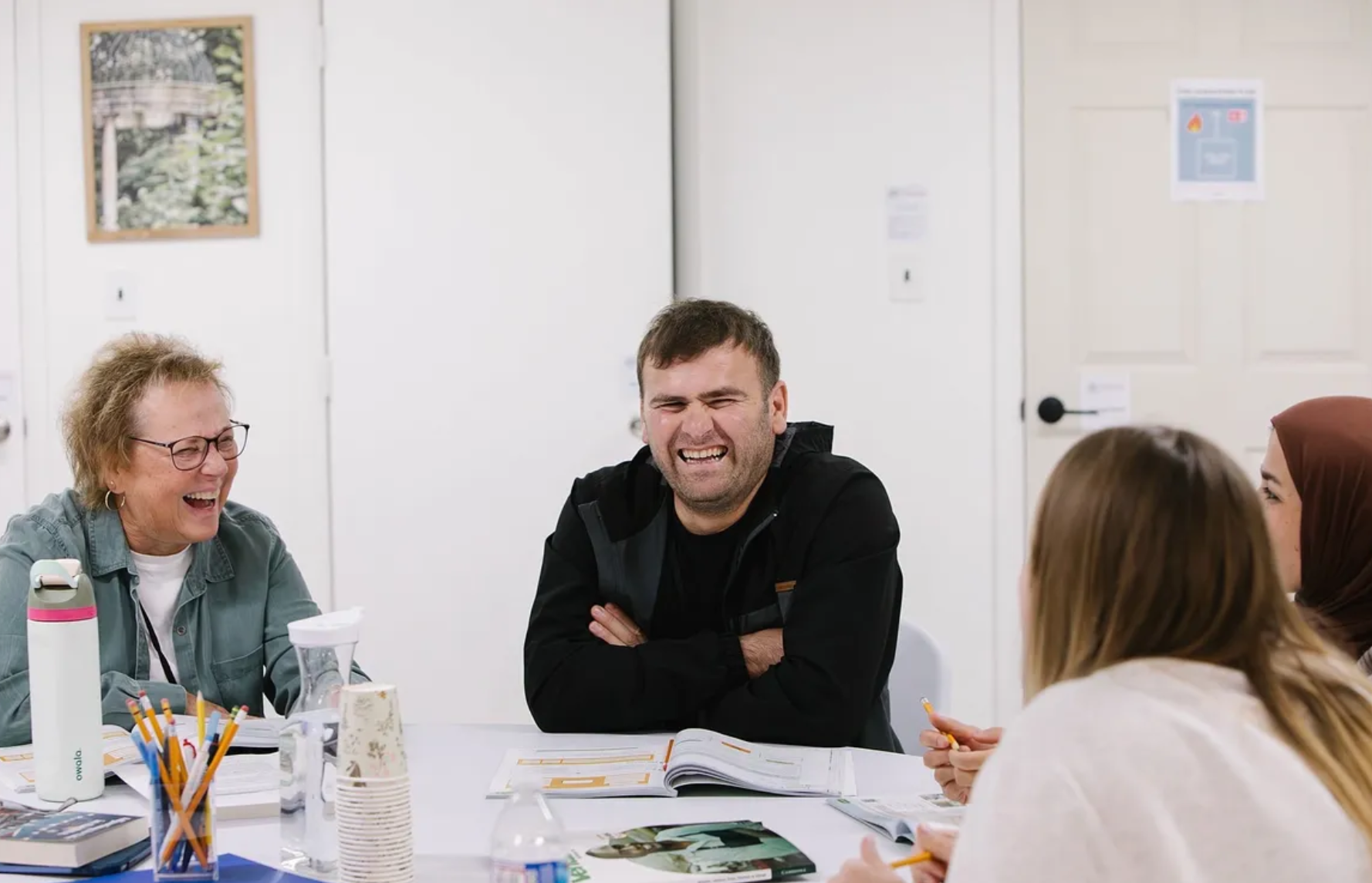
Providing English classes allows new neighbors to find their footing and find community, says Michelle.
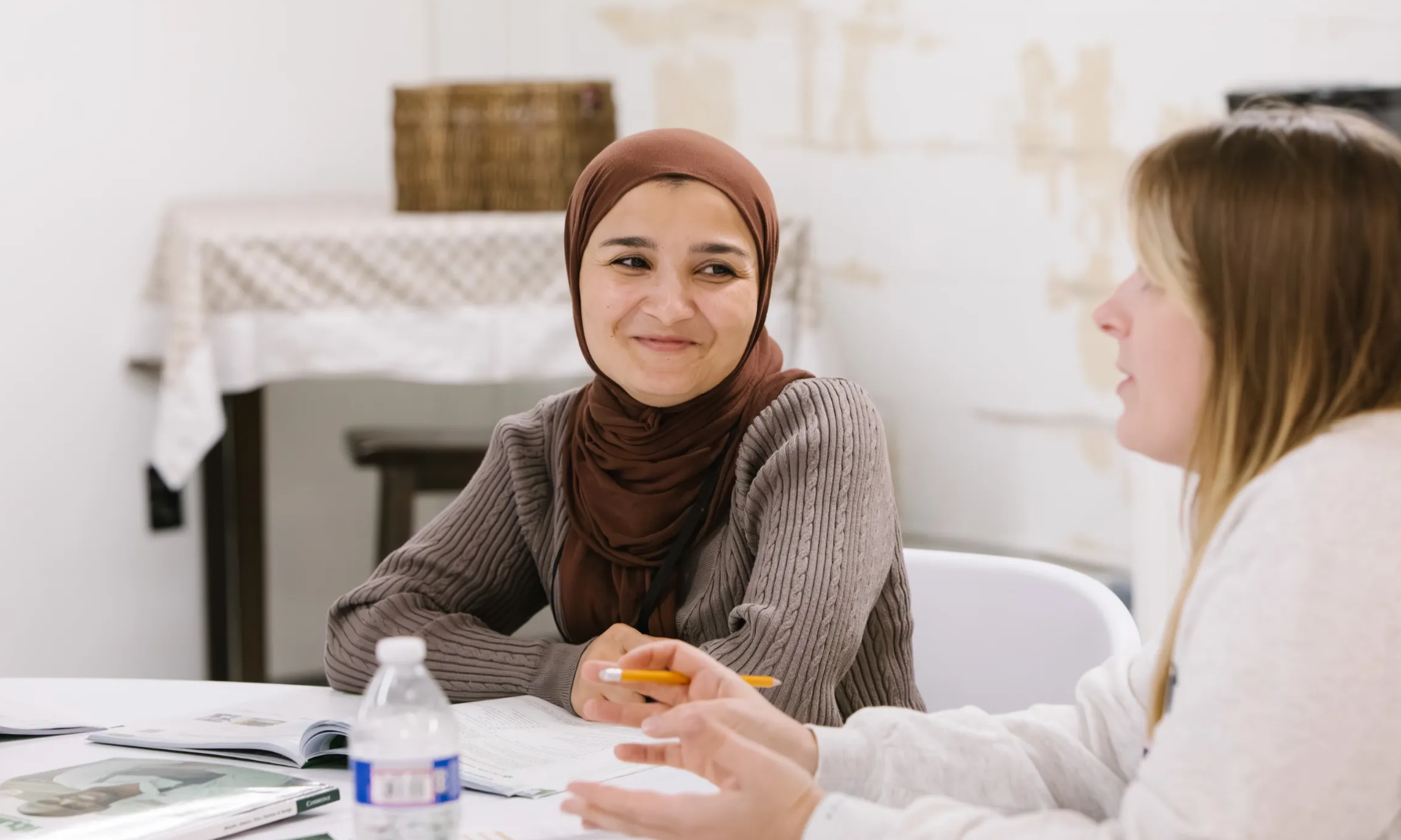
Even with the classes in place, she and her team continually ask, “What are the barriers to the classes?” A ride to and from work or class, a warm meal and the weight of financial strain can all affect whether someone attends.
By removing these barriers, SEEDS becomes a place where people show up as equals, each with gifts to share. A volunteer offering to teach, a mom practicing English after a long shift, and a donor dropping off a crib each become part of a shared ecosystem of support.
As people attend these services and engage in hard conversations, Michelle says a key pillar at SEEDS is ensuring they don’t have to retell their stories over and over.
When asked how she balances self-care while carrying and being present with these stories, she said part of it is letting people decide how much of their story they want to share and with whom.
“When they’re ready, I’m ready,” Michelle said. “I want to honor that.
Michelle is still working on the self-care part, but with more support from external resources, she’s starting to learn what that means.
One non-negotiable each week is a “Grammy day” on Wednesdays.
“I’m very present with very little cute children every week,” Michelle says, laughing softly, a smile tugging at her face. “So that’s built in and that is a guaranteed breath.”
Another source of joy for Michelle comes from watching her children engage with the world, seeing their choices reflect curiosity, empathy, and intentionality. Her oldest two, Tyler and Connor, often joke about having a “pre- and post-Cambodia mom.”
“The way we shopped changed,” Michelle recalls. “I learned so much about direct trade, fair trade, and ethical shopping while working in the industry and walking past garment factories with bars on the windows and guards outside. You couldn't see in, and those working there couldn't come and go at will. These were not safe or sustainable working conditions.”
“Nike wasn't a brand that was not known for its care of the people who made their products,” she continued.
Those lessons found their way into family humor. Michelle laughs as she explains that her sons and their friends told guests to remove their shoes before coming inside, “or their feet might catch on fire.”
But underneath the jokes are actual lessons learned. Her children have carried those values forward: pursuing careers in social work and counseling while striving to embrace belonging and fairness.
These moments, paired with Michelle’s career, bring her joy, especially as she begins to witness change firsthand.
“I’m thinking of one participant in particular,” she says. “She was here with an immigration lawyer [and] hearing her story, watching her start out in beginner English and now she’s in level three and got her driver’s license. She works at a school so that she can be on the same schedule as her kids.”
Michelle recalls another story where they helped a man transition from a hotel to an apartment. She describes how SEEDS supported his efforts, from matching his security deposit to providing donated furniture.
“That’s just connecting dots,” she says. “He’s doing the work.”
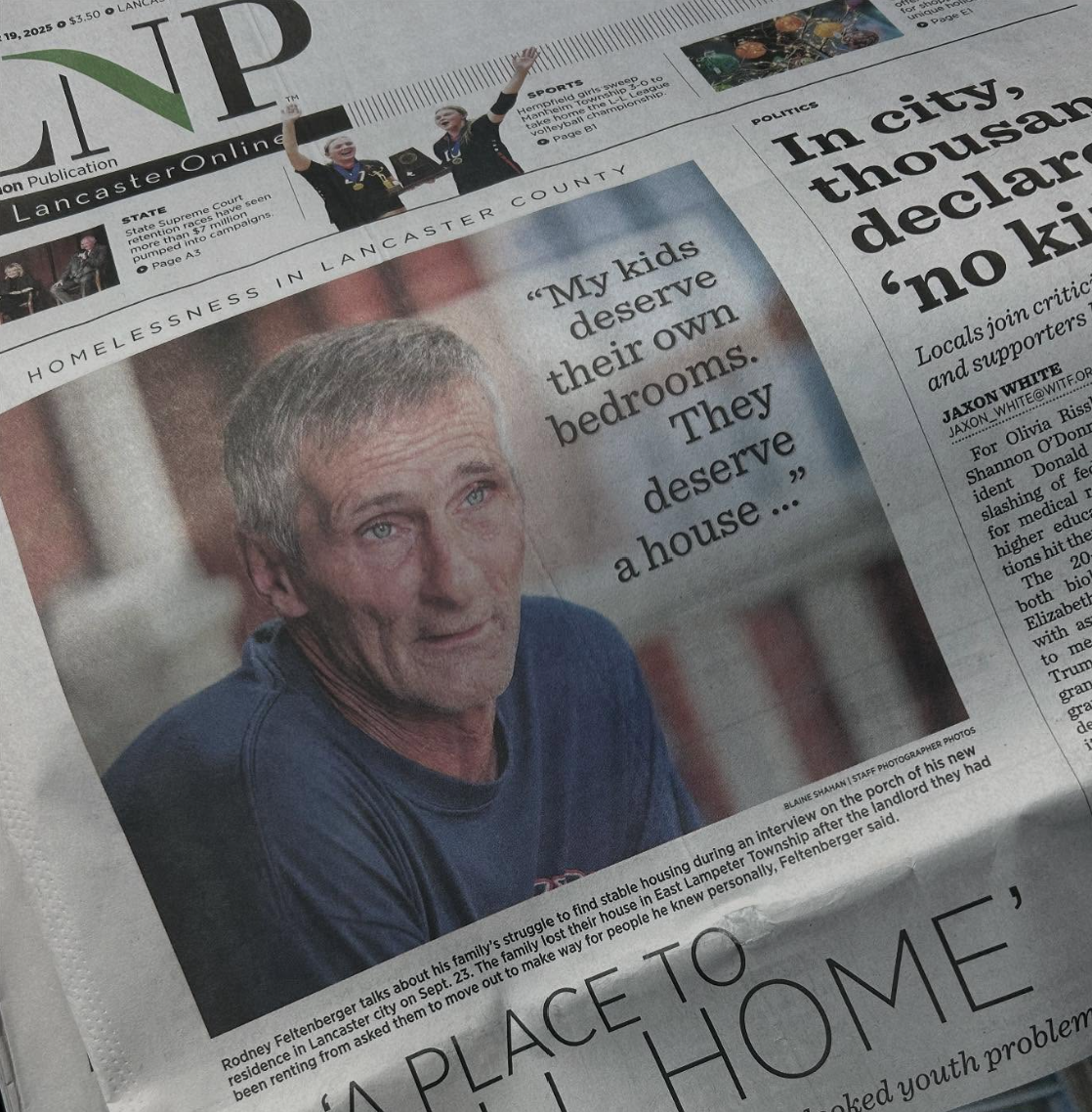
An article in LNP | LancasterOnline featuring a CV SEEDS program participant.
As for her hopes for the future, if Michelle “could wave a magic wand,” she would change how people would recognize each other’s shared humanity and have “neighbors see all neighbors as neighbors.” By doing so, misconceptions will hopefully change.
Michelle says that those SEEDS connect dots for are “hardworking people, full of so much grit.” They just need someone to come alongside them in community.
She dreams that this work will grow far beyond herself. She is dedicated to it for the rest of her life, whether continuing with what she’s doing now, returning to Cambodia, or engaging in other efforts to remove barriers.
Many people think of stewardship as financial, but for Michelle and the team at SEEDS, it’s something deeper. They function less like an organization and more like a garden, where dignity is nourished, relationships take root, and barriers are cleared to the best of their ability. What ends up growing is individual change and a more connected community.
“We desire to honor the value and giftedness of all people,” Michelle said. “When people show up at the door, our hope is to listen well, be corrected where we don't understand, and help steward their value so they can be who they are.”