
Building Paper bridges
It feels like lately we’ve been asked—as a individuals, as a community, as a nation—to have a lot of hard conversations.
Whether it’s reckoning with the results of a divisive election(s), the impact of national issues at a local scale, or even wading into the toxic fray of modern social media comment sections, it increasingly feels like the boundaries of what is “easy” to talk about with our friends and neighbors is becoming tighter and tighter around us.
At Lancaster County in Common, we are working to make hard conversations easier. But to do that, we have to reject the false choice we’ve been given about them.
We started developing our Covered Bridging Deck to test two clear ideas:
We believe that a shared sense of place can give people the chance to start conversations from somewhere different than political or ideological: instead beginning literally from the place we live.
We also believe that games and play can be a low-bar entry into building connection with people who might not do so by themselves.
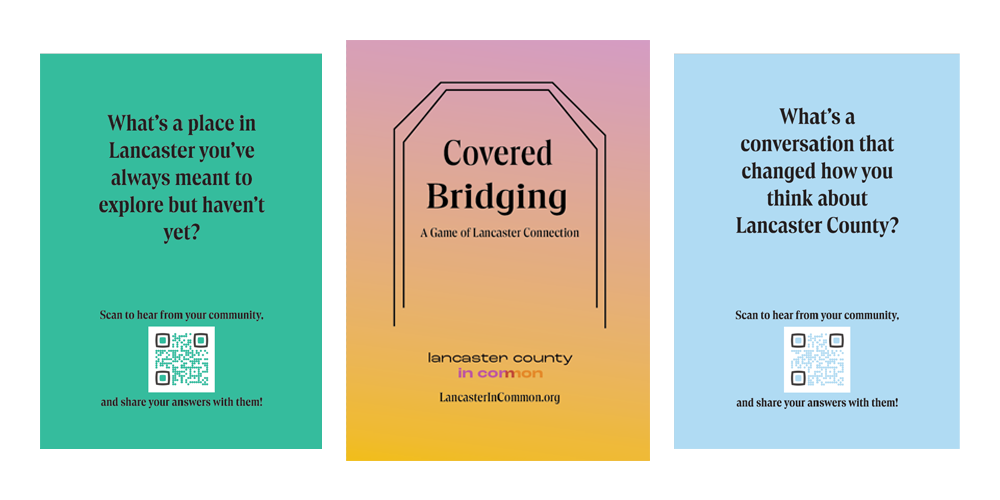
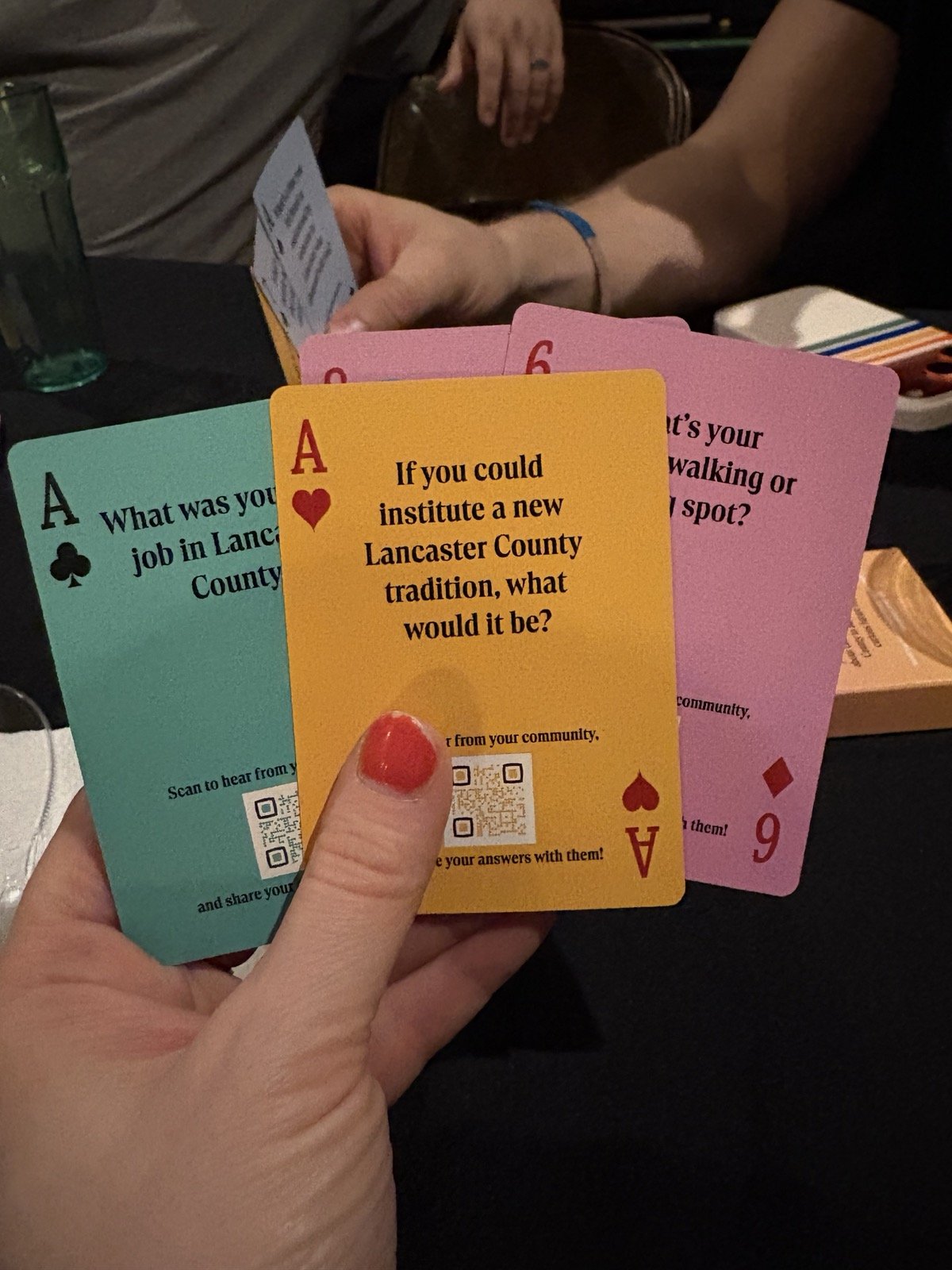
Covered Bridging is a simple deck with 52 custom questions all about people’s experience in Lancaster, separated into four categories/colors: Sense of Place, Daily Life, Culture, and Connection. The only right answer to any one of the questions is your honest one, and each person’s answer will likely be different. The hope was that by sharing different experiences united by a similar place, we can both learn new things about the people around us, as well as deepen our shared understanding of the place we live, and our connection to the residents here.
We printed our first 50 decks and immediately knew we had ordered too few.
We printed another 100 decks and faced the same issue.
This wasn’t just a shot in the dark. Organizations that have been tracking social trust have reached the same conclusion: in their latest report, PACE Funders’ “How to Talk Bridgey 2.0” identified that geography is not as big of a polarizing factor as people might think; that people’s beliefs in urban areas and rural areas are shaped by ideology, not geography, and conservative people in urban areas share many of the same beliefs that conservative people in rural areas do, and vice versa for progressives. Place, then, is as close to a neutral starting point as we can find in an increasingly polarized world.
We also know the psychological benefits of play at all ages for social and emotional health, as well as for building community connections. Whether it’s a weekly pick-up basketball game, a mahjong group, or a poker night, games and activities build strong social bonds that last.
It was clear the interest in something like this was there (although admittedly we were giving them away), but the question arose:
What should people do with the Covered Bridging Deck?
A game within a game
Much like the cards themselves, there is no wrong answer, but we also wanted to provide guidance for folks who were looking for an activity to do with them. And we thought there was no better way to develop it than with the community that would be using them!
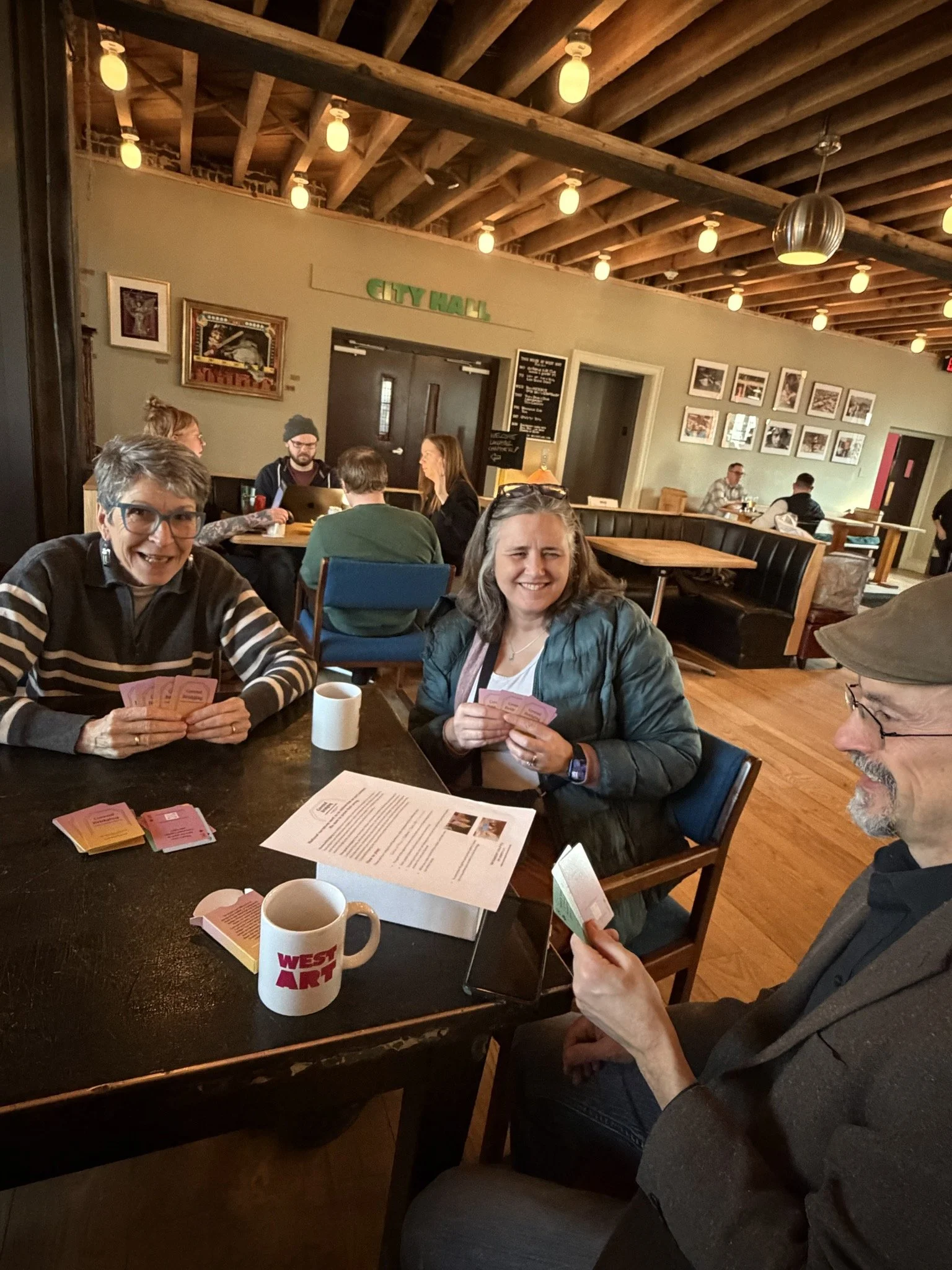
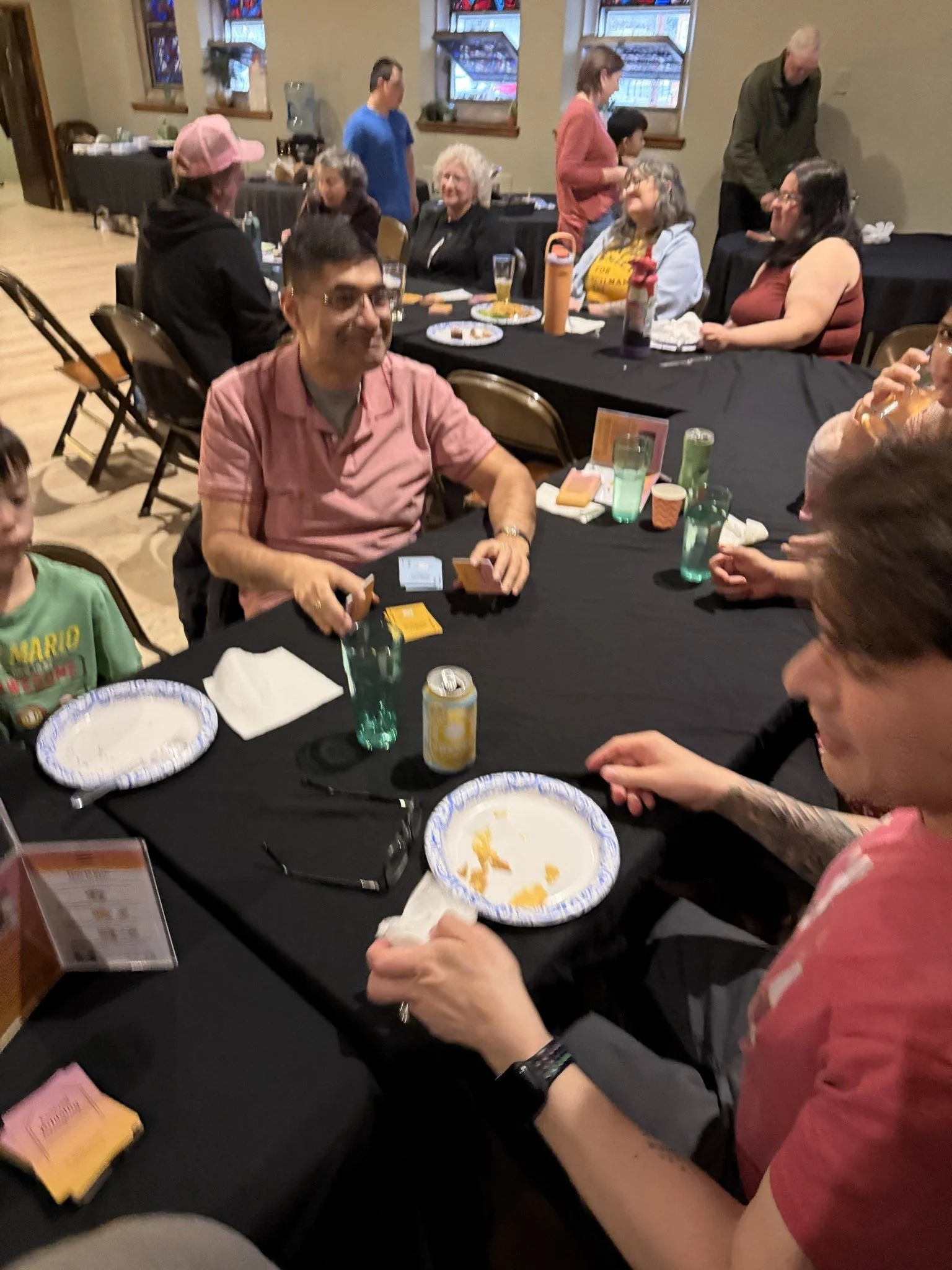
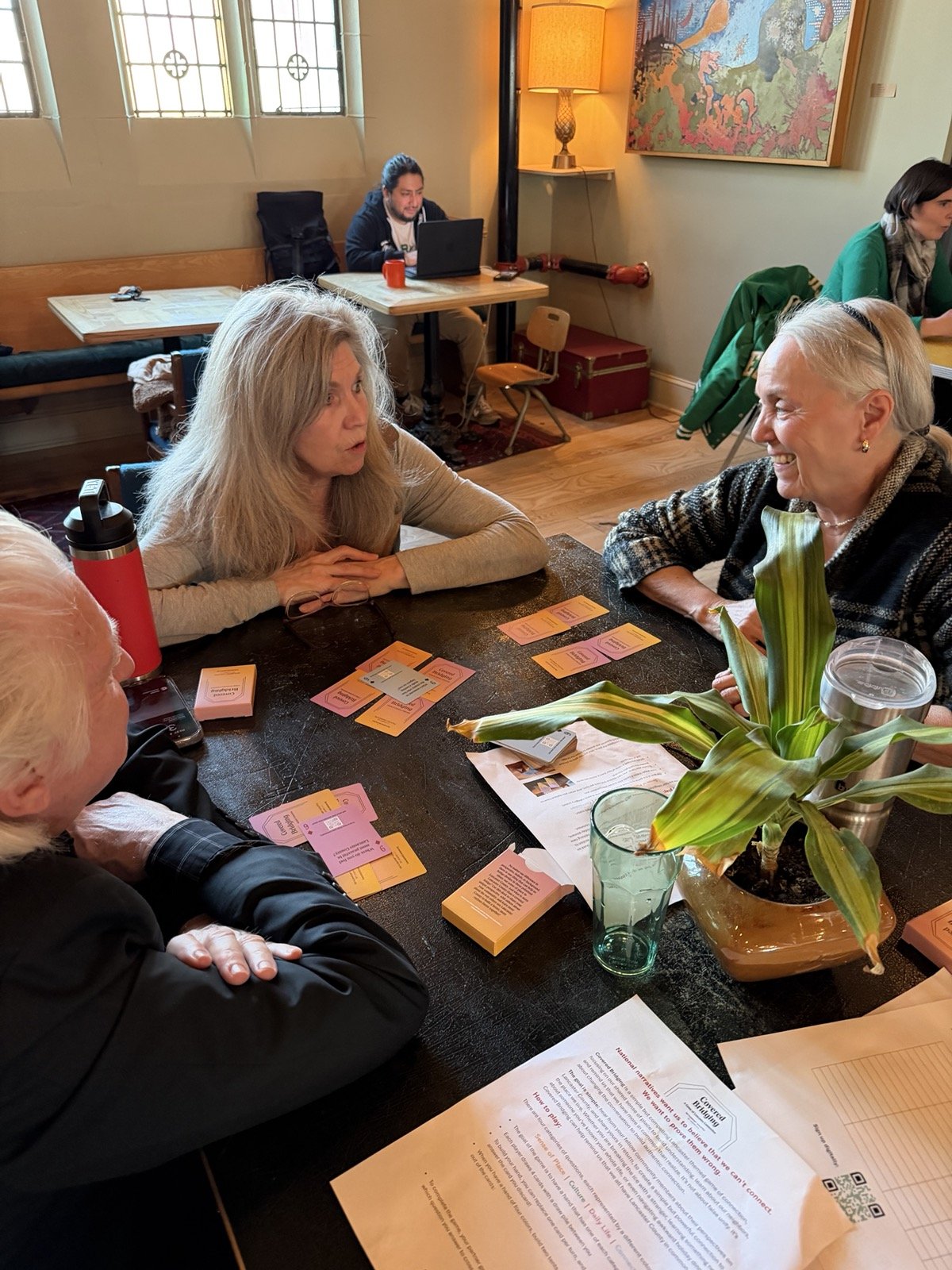
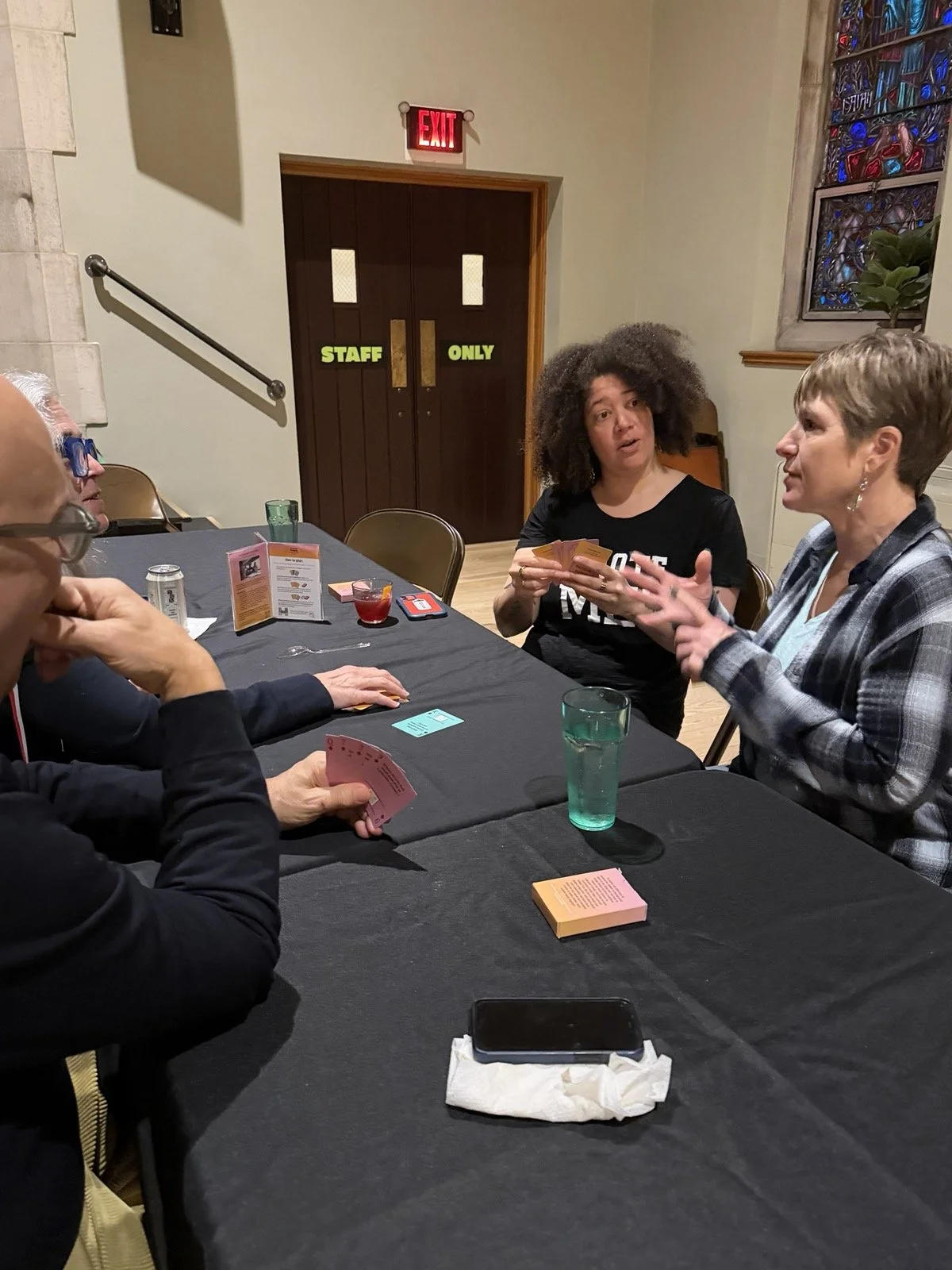
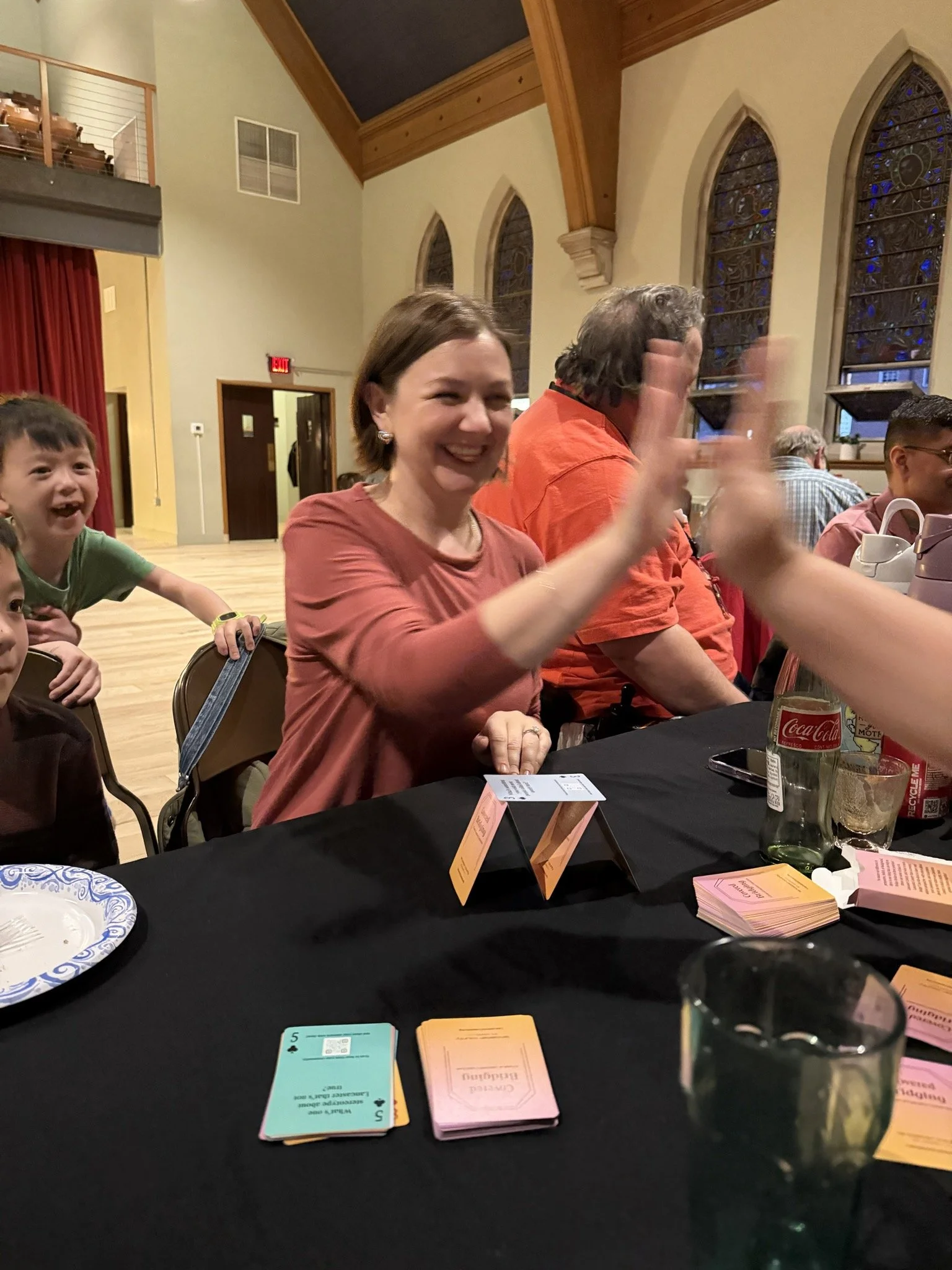
We held a few pilot plays, some public, some invite-only, to test out formats and styles. We wanted something that was easy, but structured; something with a clear goal, but also collaborative rather than purely competitive (no one wants to flip a table out of anger when you’re supposed to be bonding!). We developed and reworked a structure of a game and came up with this:
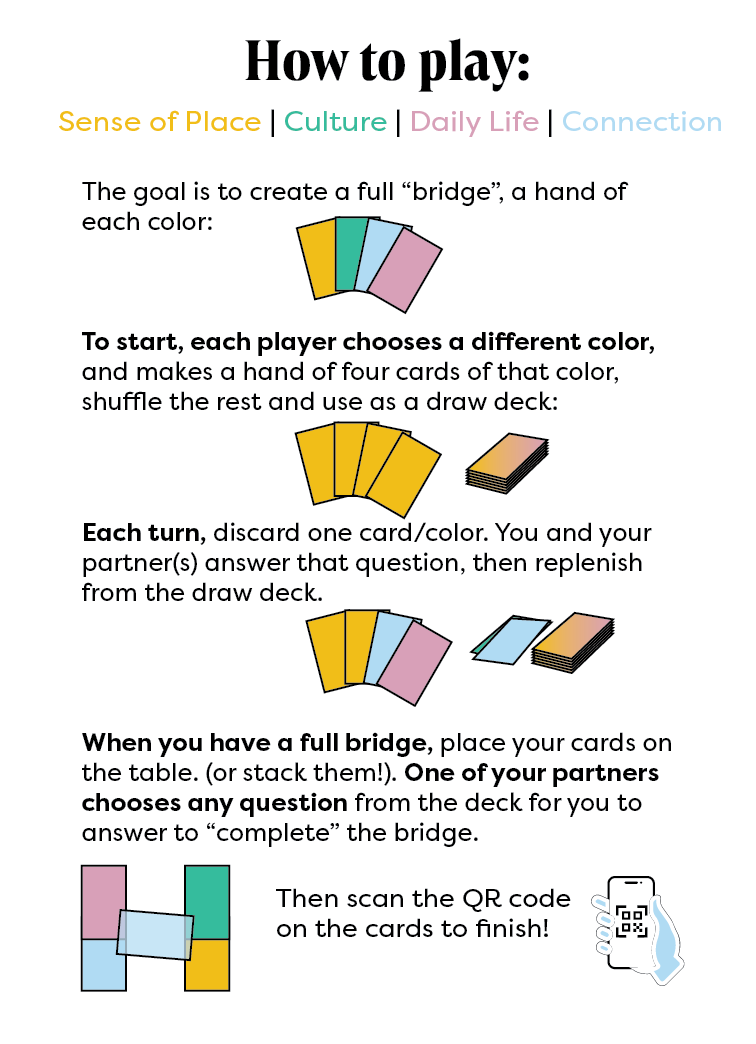
While we settled on simply making a laying “bridge” with your cards, if you ask us, the true way to finish and to complete the metaphor of shared connection by bridging is to literally make a bridge:
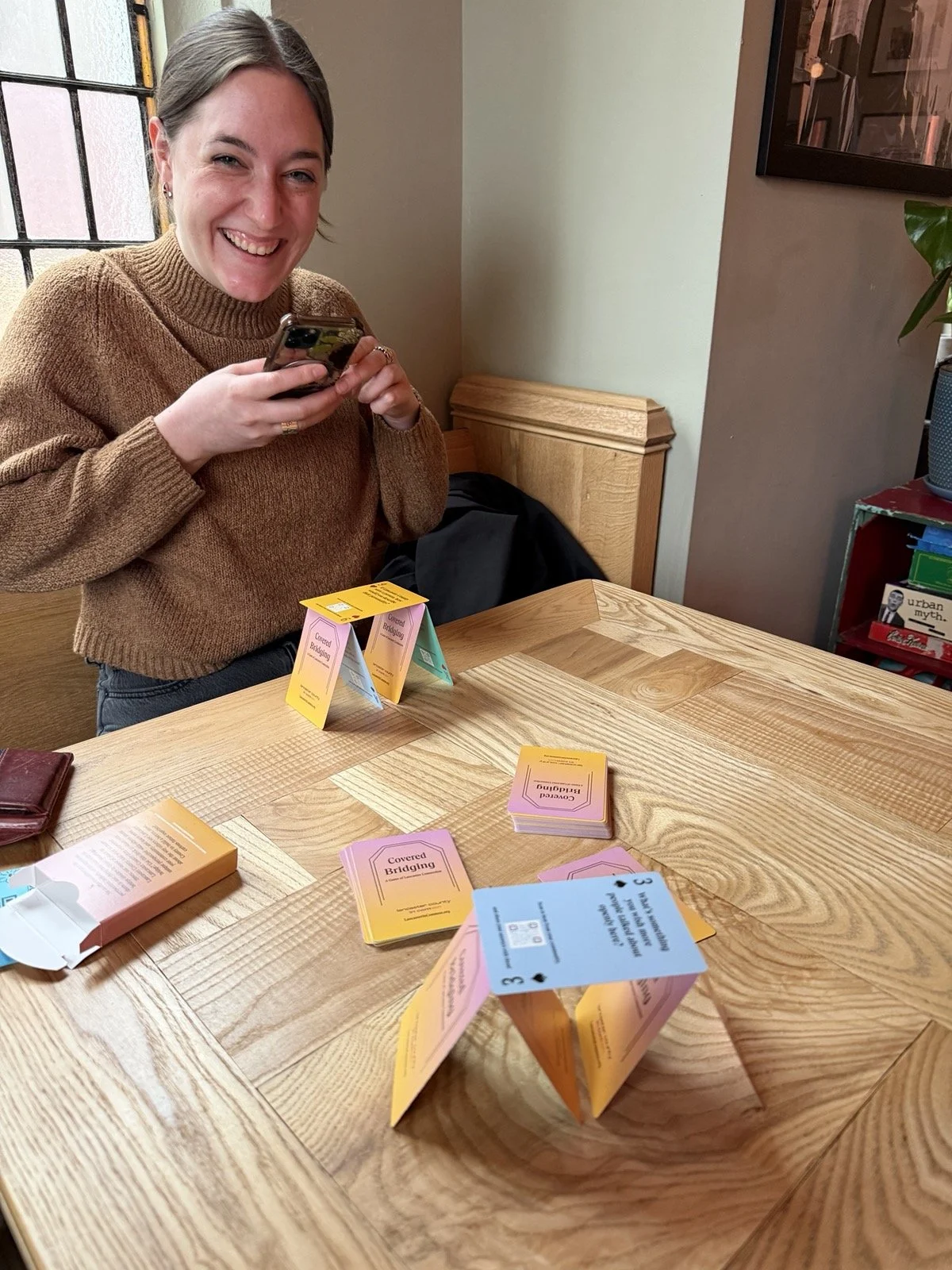
Lea demonstrating the Covered Bridging final play
Despite all our best efforts to come up with a new game, perhaps the best example of how to use the cards came from one of our playtests: they decided to just play Blackjack. The winner of the hand (either Dealer or Player), had to answer the question on the last card played. It was a perfect adaptation of an existing game with an infusion of community connection. You can easily see a family gathering where certain topics like politics, religion, or lifestyle might be a source of tension, and how a game like this could spark conversation while also playing a game that was comfortable and neutral.
It’s a good thing we decided to add standard faces to the cards so they can be repurposed for whatever game you want to play!
Coming to a space near you
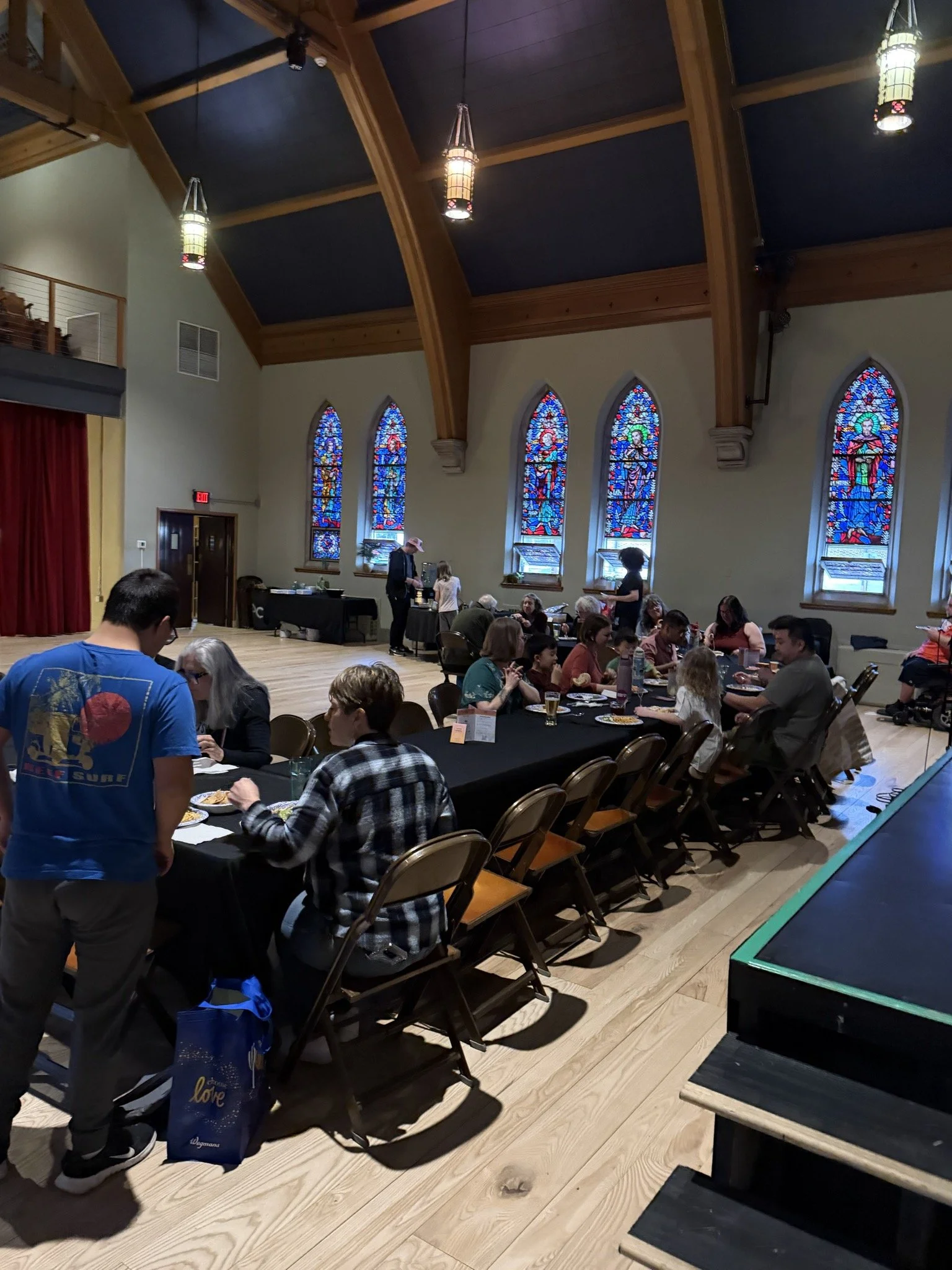
With a foundation of a game developed, we are hitting the road (literally) to take Covered Bridging to community spaces, events, and groups throughout the County. From festivals, to block parties, to community gatherings, our hope is to provide an easy way to introduce the idea that we have more in common as Lancastrians than we don’t, and even the differences can help deepen our understanding of the many varieties of people in our community.
Our hope is that the more people can be reminded—in big and small ways—of this idea, that our community can become better connected, more understanding, and more powerful.
Do you have an event, group, or gathering you would like to use Covered Bridging with? We’d love to send you some decks, or even partner up to design an experience that can help build community together.
National momentum
For every local profile we offer, we want to tie the work to similar efforts happening across the country, to show that there are way more of us than we realize who care about building community connection!
Great Plains Gaming Project
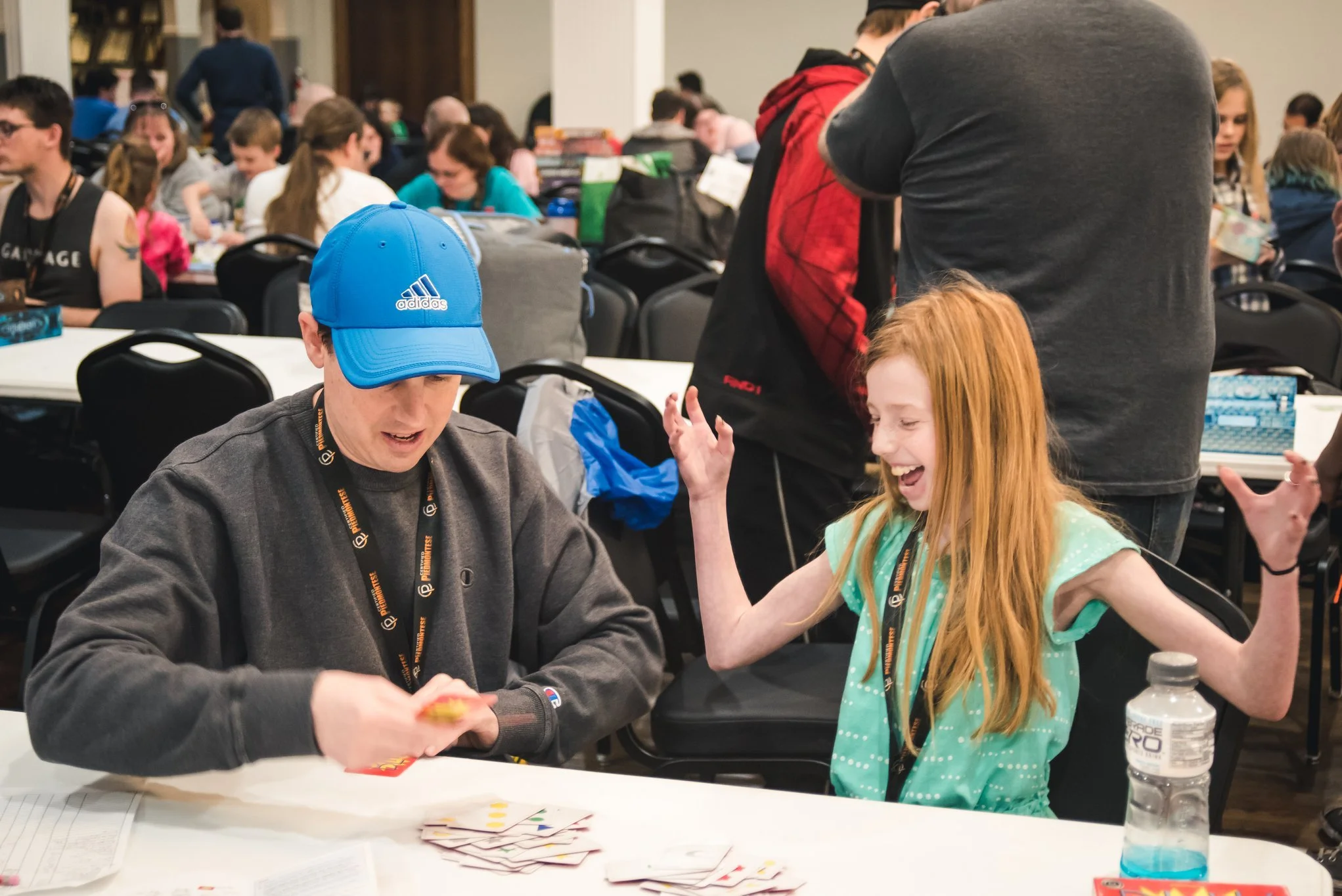
Copyright The Great Plains Gaming Project
Based in Lincoln, Nebraska, the Great Plains Gaming Project’s goal is to grow a vibrant and inclusive community where board gaming is embraced to foster strong social connections and nurture critical thinking.
At the heart of their mission lies a commitment to fostering a vibrant and inclusive community. In addition to putting on the Great Plains Gaming Festival, the Gaming Project also offers:
Game Day Support: providing board game support to local events, assisting and amplifying the communal spirit.
Donating to Game Libraries: contributing to expanding game libraries, ensuring more organizations can access these enriching resources.
Running Board Game Teaching Events: partnering with organizations to deliver engaging teaching events, introducing board games to new audiences.