
Casting for connection
There’s a saying about extended family: “we only see them at weddings and funerals”. Depending on your family, this may or may not ring true, but regardless, it speaks to the fact that for many of us there are only specific, ritualized times when we make a conscious choice to engage with parts of our community that are always there but rarely seen.
You might have other examples of this in your life: summer friends you make while visiting the pool for a span of weeks, or people you only see at church or places of worship. In fact, many synagogues have expandable walls meant to accommodate the surge of attendees during High Holidays. In each instance, a collection of people you only see glimpses of hold a shared connection (whether it’s purpose, location, or a combination of the two), and a fleeting connection that will likely fade soon after.
As I publish this—and hopefully as you are reading it—on Tuesday, May 19 in Pennsylvania, I want to call your attention to another community intersection happening right now: one that’s personal for me and hopefully for you, at least a little. My intersection is consistent but short-lived; both a source of deep connection, and routine. And unfortunately, not shared by enough people.
I’m talking, of course, about pollworkers.
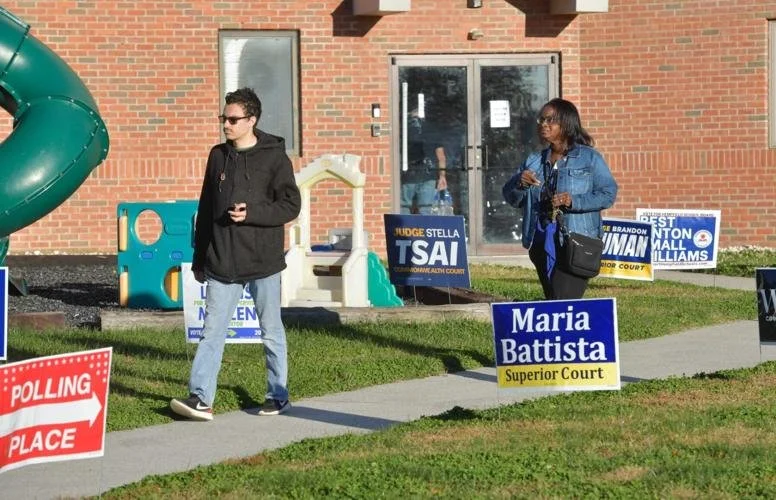
According to the Federal Election Access Commission’s 2024 report, there were nearly 96,000 polling places across the country in the latest national election. Each staffed by community members, who work 12+ hour days for a tiny stipend. There are no national guidelines about where, what, and how far away a polling place needs to be, which means that each polling place is unique.
But while the size and vibe of a polling place changes, there are some things that never do: it’s maintained by local people, from the neighborhood/area, who care enough to have an exhausting, at times (and boring at most), day for a pittance of pay so people can have their say in the way our community works.
Because each polling place is a universe unto itself, I’d like to tell you a little bit about mine. I ended up as Judge of Elections for my precinct, riding a wave of popular support of one single vote (it might have been me? I truly don’t remember). Since then, I have worked eight elections in a sunless church basement, a block from my house, with a mostly consistent cast of people.
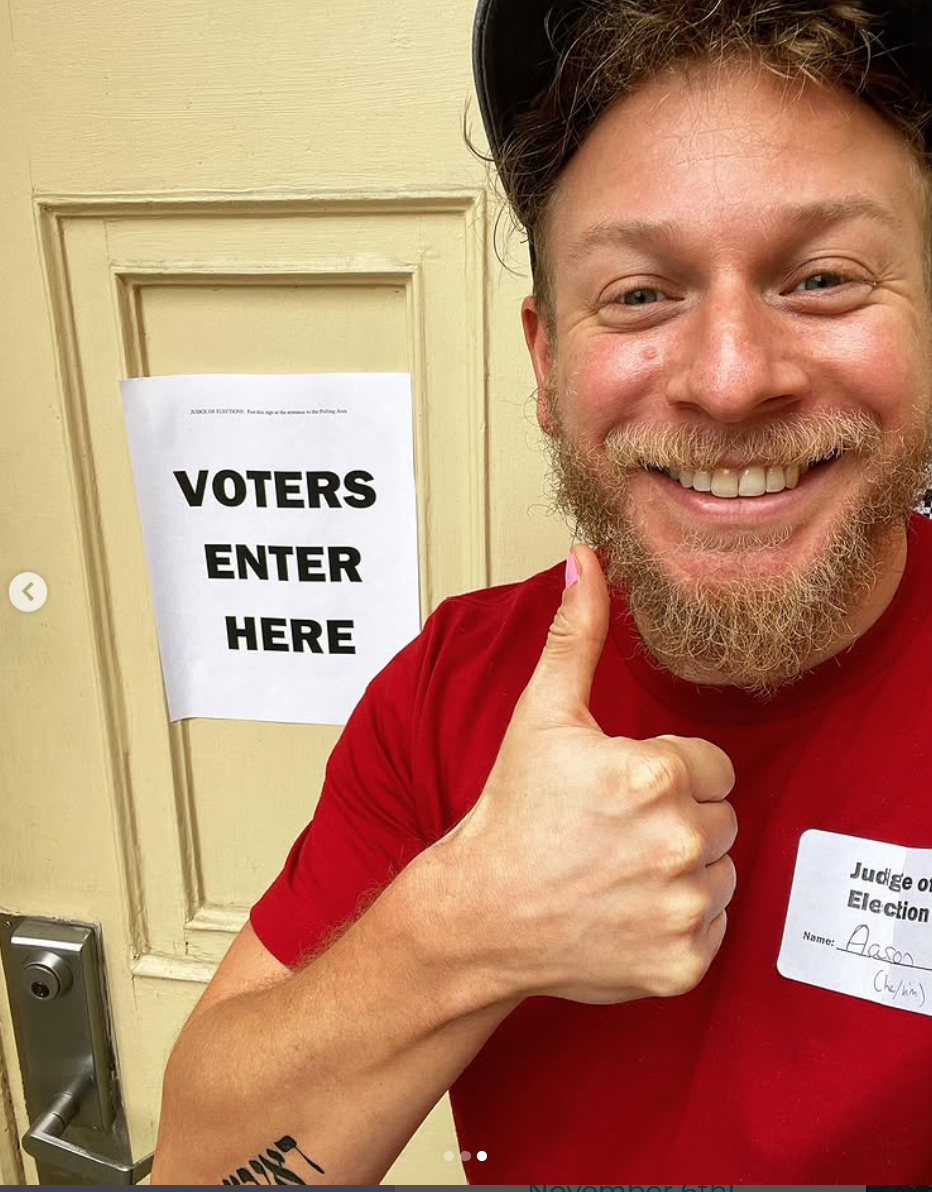
No photography is allowed in active polling places! We follow rules here!
Each election, I check in with the church secretary to get the key to the basement.I lug the large white tables around and set up the chairs, election equipment, and ballot materials the night before to get ready and move the annoyingly heavy statues of saints out of sight, or cover them if I can’t.
On election day, my team arrives: a motley crew of residents spanning the age and life experience spectrum.
There’s T, who has worked the polling place for at least a decade and prefers to be the one to give the ballots out. After talking with her the first time, I found out that she used to live in the residences at the affordable housing organization I worked for. She often had to leave her pollworking early to care for her husband, who had Alzheimer’s. She now stays the full shift, as he passed away last year.
There’s J and B, a young married couple who tag team check-in, relatively new to the roles but quick enough studies to fill in for me as judge one election when I tested positive for COVID the night before. B and I compare our Wordle scores. J is fluent in Spanish and is invaluable for our ESL voters. They always ask for Chik-fil-A for election night dinner.
There’s S, a converted devout Greek Orthodox Christian, who is new to our polling place, but has recently become motivated enough to run—and win—the office of Majority Inspector for our precinct.
There’s our Constable from just down the street, who pays for his own badge and gear to help people feel safer when he’s on the scene. He shows us pictures of his adopted son, and his new baby daughter; he brings us long johns from Achenbach’s every election. He started doing it because the Constable before him did it.
And then there’s an honorable—and distinguished—mention to R, who has worked every election at this spot since the 1980s and proudly voted Republican in every election since the 1950s. He has no use for an alarm clock; he wakes up with the church bells from our polling place every day. He brings no book, no phone, or entertainment of any kind for the entire 14-hour shift.
Before I became judge, these people were just the nice people who handed me my ballot and asked how I was. We would make small talk while my spouse finished voting if I was done first, or vice versa. It was the only time of the year I saw them; in May/April for the primary, and then again in November. But each time I was surprised that they remembered me.
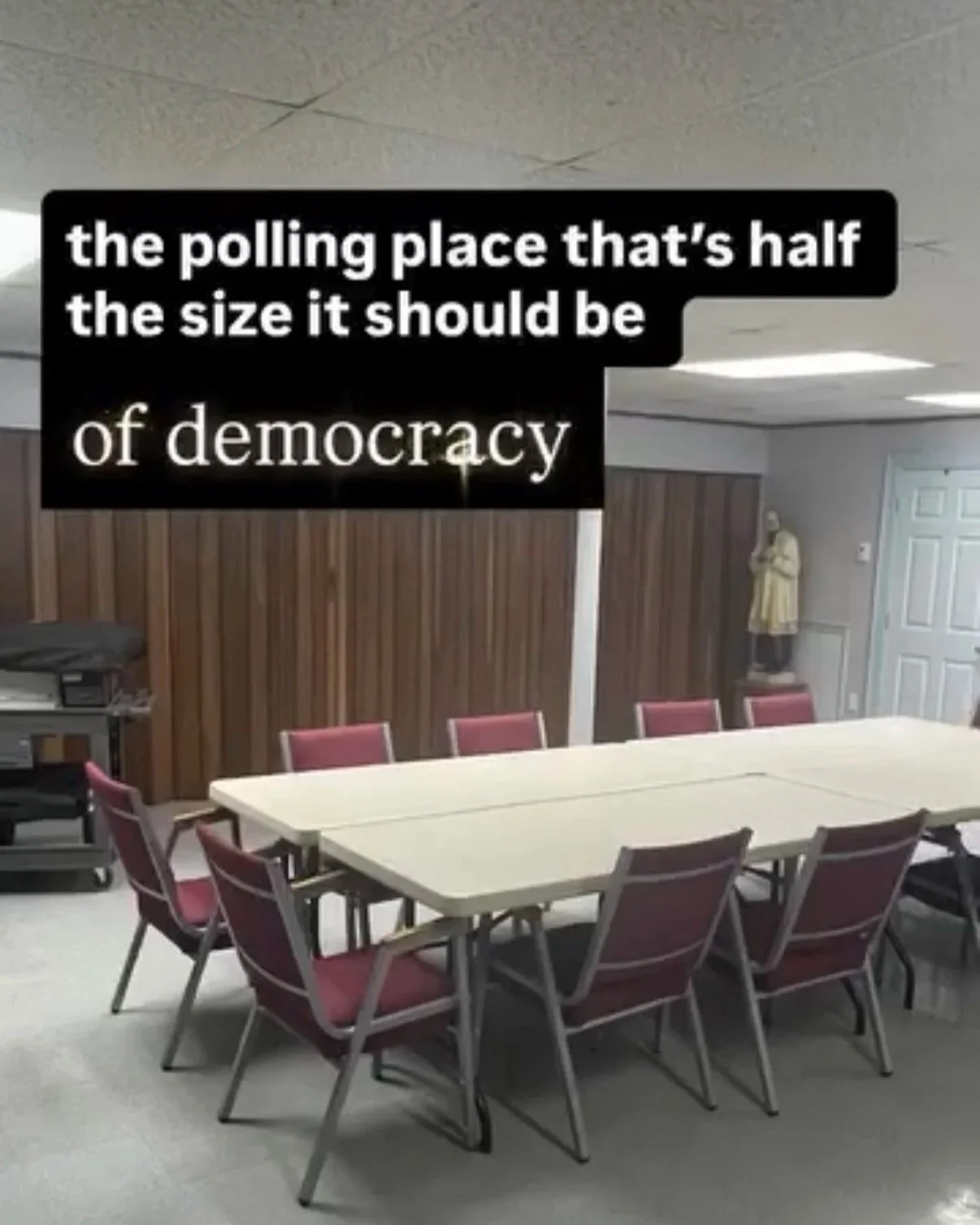
We love arriving at our polling place to learn you have only half the space you usually do.
Now that I’m on the other side of the check-in desk, it doesn’t surprise me at all. Even though we only see each other for a few minutes, you can learn so much about the people who are—by definition—just down the street from you.
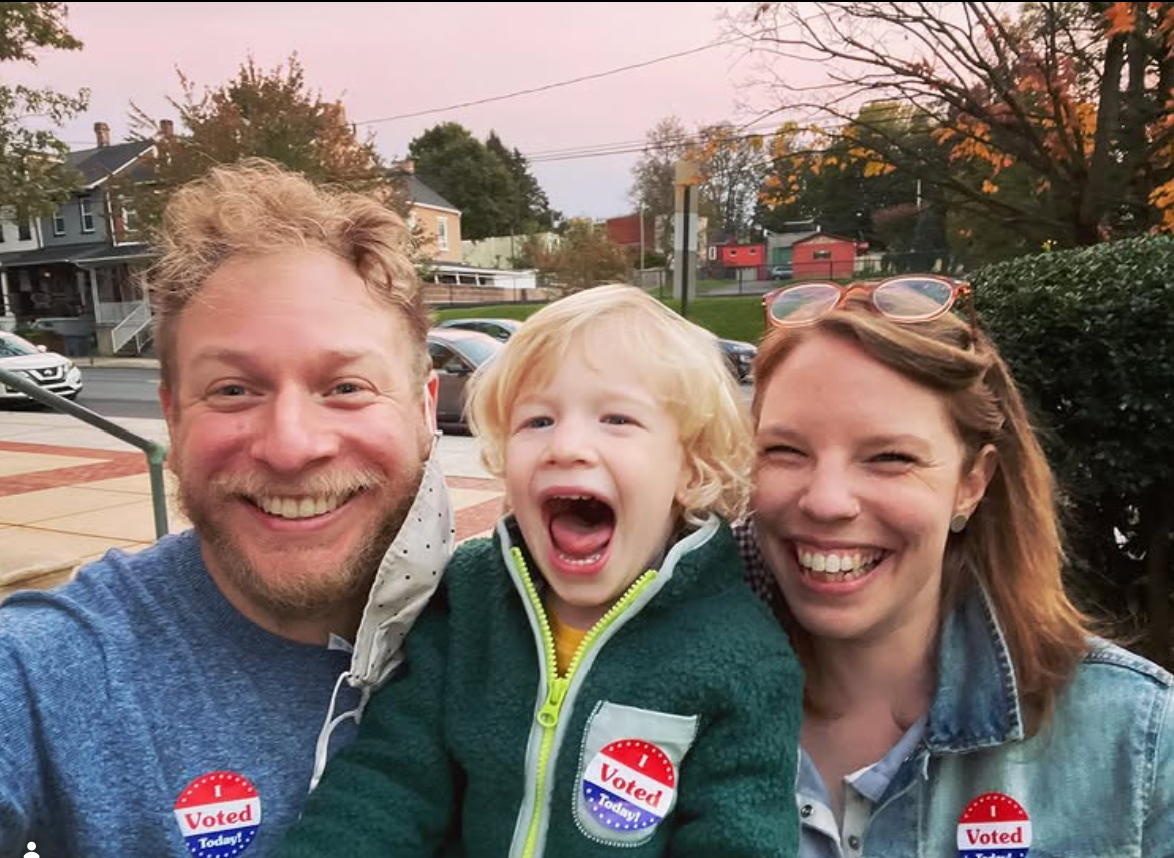
Over the few years I have worked, I have seen bright eyed children clamoring for an “I VOTED” sticker turn into tweens who wryly roll their eyes at the offer (but still take it), new children arrive in slings or strollers, couples voting together as a married unit for the first time with a new last name, and people walking in alone, speaking bittersweetly of the ones who are not with us to vote anymore.
There’s the elderly man who is always the first to vote, arriving five minutes before polls open—teasing us that he wants to vote early to see if we’ll let him; he so effortlessly lets “hallelujah” roll off his tongue after every sentence I’m not convinced he even realizes he does it. There’s the couple who insist on knowing their voter number, no matter the time of day; one of them has begun transitioning, and their voice gets deeper and more sure of itself every election. There’s a Cuban couple who mainly speak Spanish, whose eyes fill with tears when they vote, praising Marco Rubio and hoping the Republicans they are voting for will end the Communist regime’s hold on the island.
What makes my head spin if I think about it too much is that this is just my polling place. Across Lancaster County, on two set days a year, this plays out in hundreds of locations across our community. And I see them all if I’m unlucky enough to not get out of my polling place fast enough with the ballots, as every judge of elections from across the county descends on the same place at once. Being stuck in an hour-long wait after a long day gives you time to reflect on the gravity of this people-powered system, in addition to feeling like you’re in the final scene of Field of Dreams:
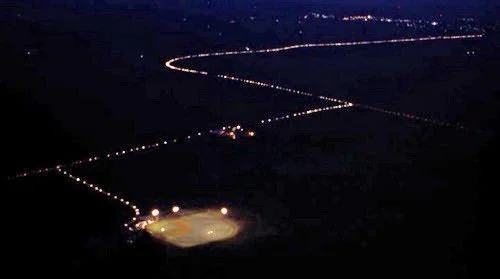
A fully accurate depiction of Steel Way off Manheim Pike after polls close
Each judge is from one of more than 200 polling places, each polling place with hundreds of people from all walks of life who share a neighborhood or precinct, coming together to see each other for a (hopefully) brief part of their day. Each place a hyper-local outpost of community connection that gets disassembled as quickly as it comes together.
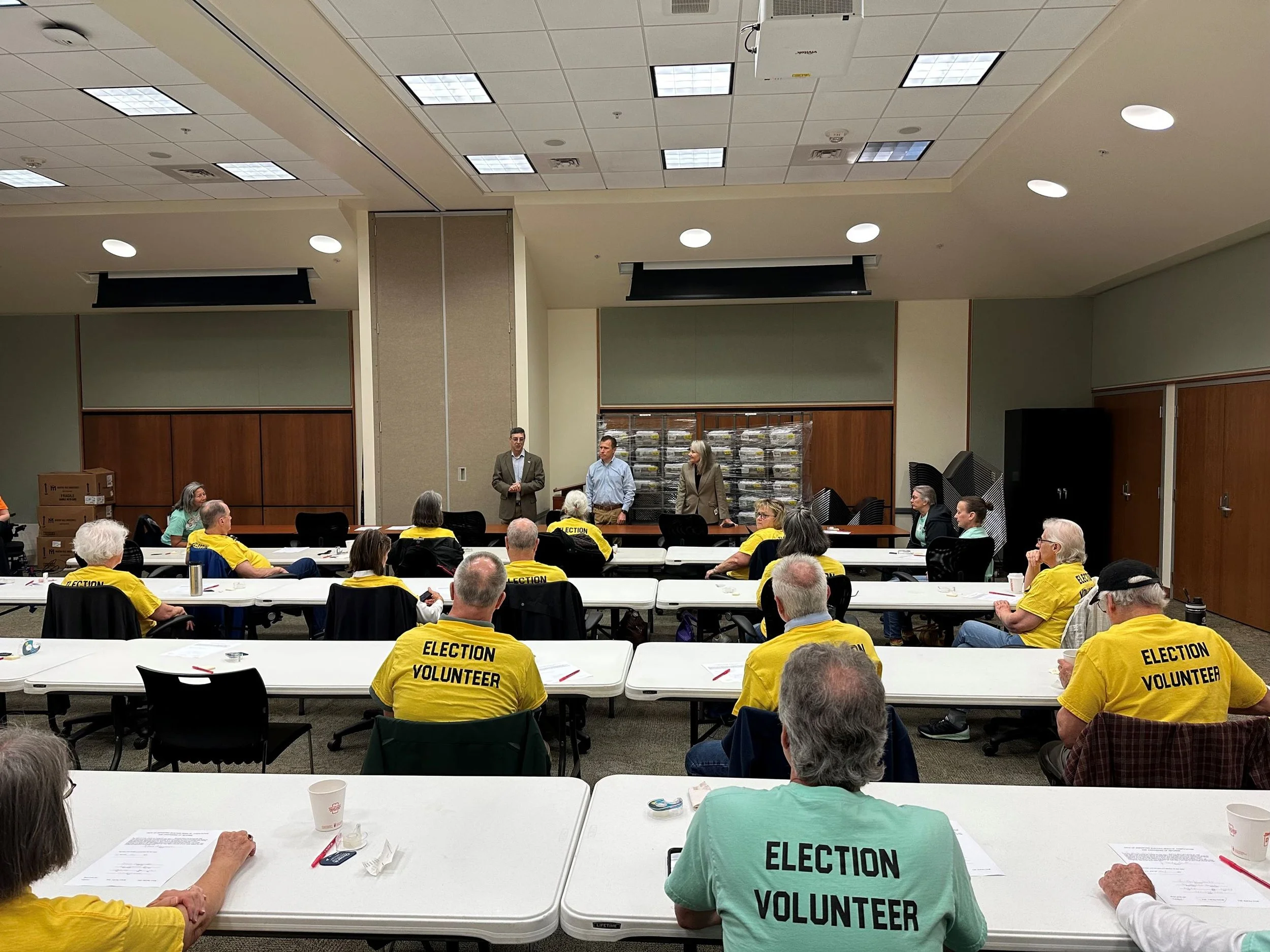
Image from Lancaster County Board of Elections
What roots us here for these moments is the place we live. And our shared agreement that we should keep trying to make our community better, in this case by voting. But to do that effectively, we need to know each other better.
This brief community weaving that occurs in a polling place is only the fringe of the deeper local connection that could be harnessed with some effort. And despite all the forces working against us—national polarization, time deficit, social isolation—for one fleeting moment across our community, it does happen. What opportunity does that present to us?
As you vote, either today, or in the next election, take notice of the people working, the people in line with you to vote, the people greeting outside. All parts of a local connection point that is precious, and tenuous, but only if we let it be that way. Ask someone new about their life outside this moment and better know your neighbor.
Ask, and you might learn that they’ve only just moved in and are voting here for the first time. And if that’s the case, you’ll get to say my favorite election day phrase:
“Welcome to the neighborhood! I hope I’ll see you sooner rather than later.”
National Momentum
For every local profile we offer, we want to tie the work to similar efforts happening across the country. Take a look at the weaver below.
Urban Rural Action’s Conservative Leadership for a United America
Founded in 2018, Urban Rural Action on the conviction that geographic, generational, racial, political, and other differences in the U.S. are a source of strength.
Their recently launched Conservative Leadership for a United America program works to empower conservative leaders with relationships and skills to strengthen the Republic and prevent political violence ahead of the 2026 midterm elections.
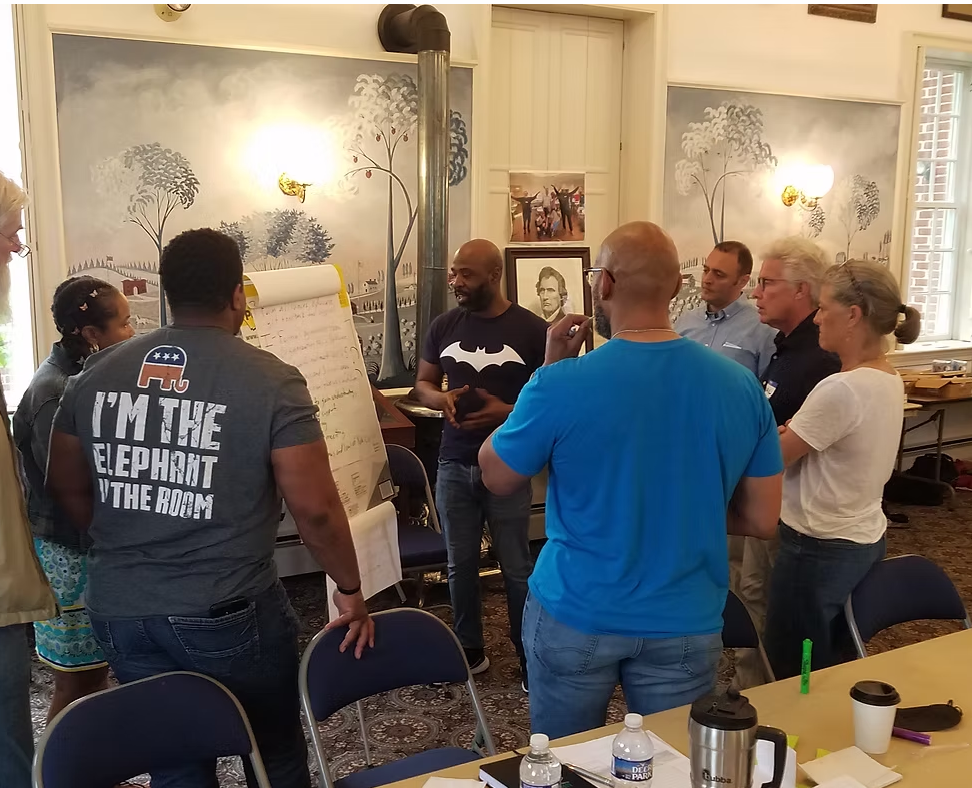
Conservative Leadership for a United America is a non-partisan, conservative-led program that aims to build a robust, cohesive, and effective coalition of conservative leaders nationwide united by a love of country, a commitment to problem-solving across differences, and a willingness to take action to strengthen our democratic republic and prevent political violence.